Home staging isn't the exotic luxury it used to be. Back in the early 2000s, most people only saw professionally styled homes when they toured a new construction model home. The builders knew something that many sellers still haven't figured out: it's dramatically easier for buyers to make purchasing decisions when they can see a home decorated beautifully and set up like someone actually lives there.
Here in Lexington, Kentucky, I've watched this shift unfold over my years working with sellers. What was once considered optional has become essential, and the numbers prove it.
The Real Numbers Behind Staging
Let's cut through the noise. Staged homes sell 33-73% faster and command price premiums of 1-15% over unstaged properties, with typical staging costs around $1,500, so sellers see returns of $2 to $5 for every dollar invested. That's not marketing speak. That's your equity on the line.
On a median-priced Lexington home at around $300,000, a conservative 3% staging-driven price increase means roughly $9,000 more in your pocket. Many sellers I've worked with see significantly better results. Houses that used staging sold for an average of about 9% above asking price, and for a $300,000 house, that's an additional $27,000.
Time matters too. Buyers take about 90 seconds to save, call, or dismiss a listing. That's your window. Miss it, and your home sits. Every day it sits costs you money in carrying costs, and worse, it starts to feel stale to potential buyers.
Why Buyers Struggle to See Potential
Here's what most sellers don't realize: most buyers cannot visualize potential in empty or cluttered spaces. They're not being difficult. It's just how the human brain works.
When a buyer walks into an empty room, they see square footage. When they walk into a staged room, they see a place where they can imagine their morning coffee, their dinner parties, their life. A National Association of Realtors study reveals that 81% of buyers find it easier to visualize themselves living in a professionally staged home.
This emotional shift is crucial. With staging, every image tells a story of lifestyle possibility, making buyers think "I could move in tomorrow" rather than "How much work would this need?"
What's Changed About Staging in 2026
The design trends have shifted significantly from what we saw just a few years ago. In 2026, buyers are looking for something different: homes that look lived-in, not showrooms. The cold, sterile minimalism that dominated Instagram and real estate listings for years is fading.
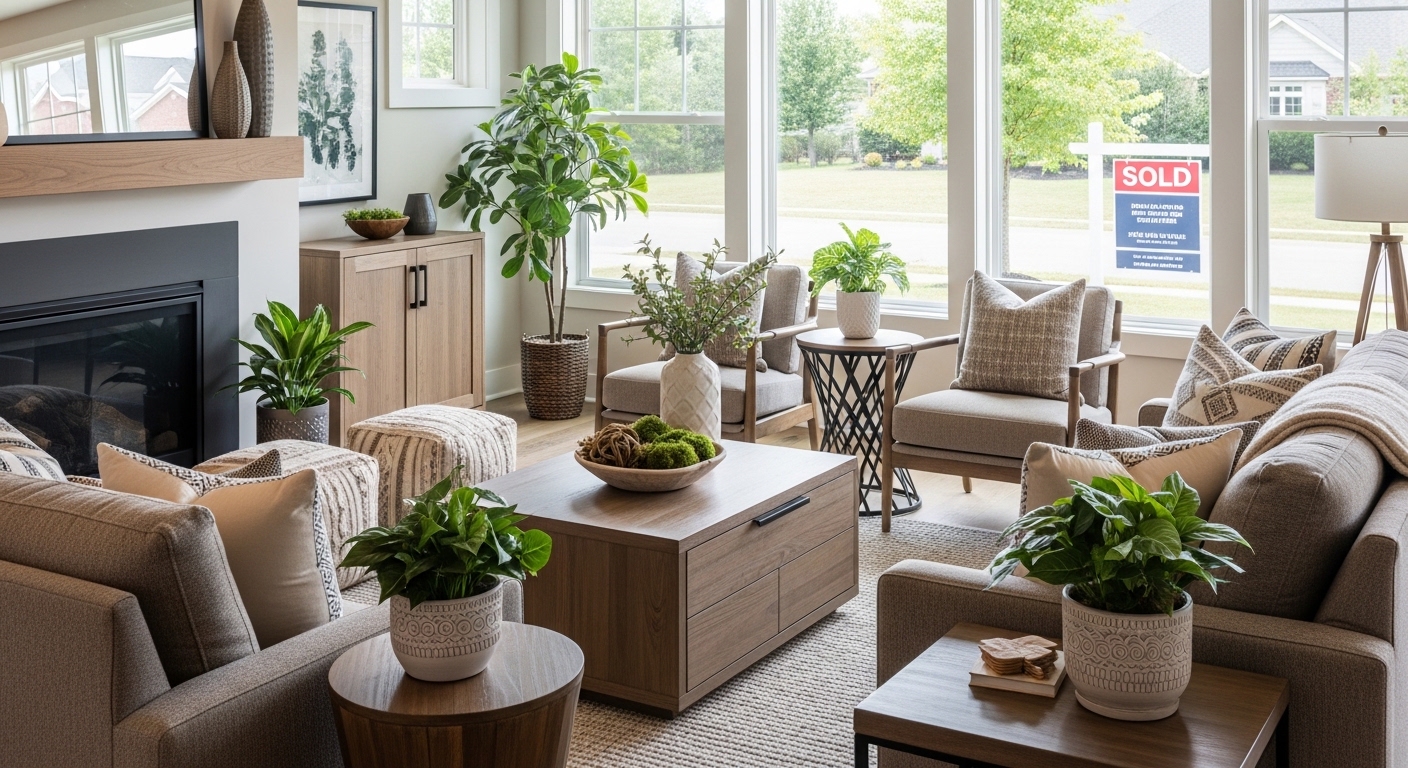
In 2026 with a clear preference for earth tones, natural materials, and spaces that convey comfort. This is actually good news for sellers. It means staging feels authentic. A cozy living room, warm wood tones, plants that bring in biophilic design elements, and furniture arranged for conversation rather than perfection all resonate with today's buyers.
The most important rooms to focus on haven't changed. The living room has the most impact at 37%, master bedroom at 34%, and kitchen at 23%. If your budget is tight, that's where I'd recommend starting.
The Online Advantage
Here's what keeps me up at night as your Lexington real estate agent: 96% of home buyers begin their search online. Your home gets roughly 90 seconds in someone's search results before they swipe on to the next listing. A poorly photographed empty room might get scrolled past in seconds. A beautifully staged room with warm lighting and inviting furniture? Properties with high-quality staging photos attract 61% more clicks and are 67% more likely to be shared on social media.
When you list a home with me through HOUSEJET, our professional photography captures every staged space at its best. The photos become your 24/7 marketing team.
Physical Staging vs. Virtual Staging
You have options now. Virtual staging costs range from $1–$15 per image, compared to $2,000–$5,000+ for traditional staging. Both work, but they work differently.
Physical staging brings in real furniture, removes personal clutter, adds flowers, adjusts lighting, and creates an actual experience when buyers show up. It's the gold standard for homes that are vacant or heavily lived-in with personal items everywhere.
Virtual staging uses AI to digitally furnish empty rooms in your listing photos. Virtually staged listings get 90% more clicks and sell 73% faster, cutting down market time by 40%–60%. It's particularly useful if you're on a tight budget or if you want to show buyers different potential uses for a room (a spare bedroom as a home office, for example).
My recommendation? If you're selling a vacant Lexington home or one with serious clutter issues, physical staging is worth the investment. If your home is occupied and presentable but just needs a visual boost for online listings, virtual staging gets you most of the way there at a fraction of the cost.
The Risk of Skipping Staging
Here's the hard truth: an unstaged home that sits on the market often needs a price reduction. The average price reduction on unstaged homes runs 5-20 times higher than staging would have cost. That price reduction becomes permanent. It's recorded in your property history forever.
A $5,000 staging investment beats a $25,000 price cut every single time. Yet I see sellers every year who skip staging to save money, only to end up accepting less.
When Staging Matters Most
Staging isn't a one-size-fits-all solution. It makes the biggest impact in these situations:
Vacant homes: Staged vacant homes sell 88% faster than unstaged ones. Empty rooms photograph poorly and feel cold. Buyers struggle to understand scale and functionality.
Homes with outdated furniture: If your furnishings are 20 years old, they make the entire house feel dated, even if the bones are solid.
Homes in competitive price brackets: When multiple similar homes are on the market in Lexington, presentation becomes the tiebreaker.
Homes on the higher end: Luxury buyers expect move-in-ready presentation. Over 40% of staged homes sold were valued at $750K or more.
The Bottom Line
About 49% of sellers' agents say staging reduces days on market, and 83% of buyers' agents say it helps clients visualize the property as a home. The data isn't debatable anymore. Staging works.
The question isn't whether to stage. The question is how to stage in a way that fits your budget, timeline, and home.
If you're thinking about selling your Lexington home, I'd love to talk through your options. We can evaluate whether your home would benefit most from full physical staging, virtual staging for your listing photos, or a hybrid approach. I work with professional stagers who understand the Lexington market and what appeals to buyers here.
When you're ready to list, search for your home and comparable properties on HOUSEJET to see current market conditions. Then give me a call. Let's get you sold well.